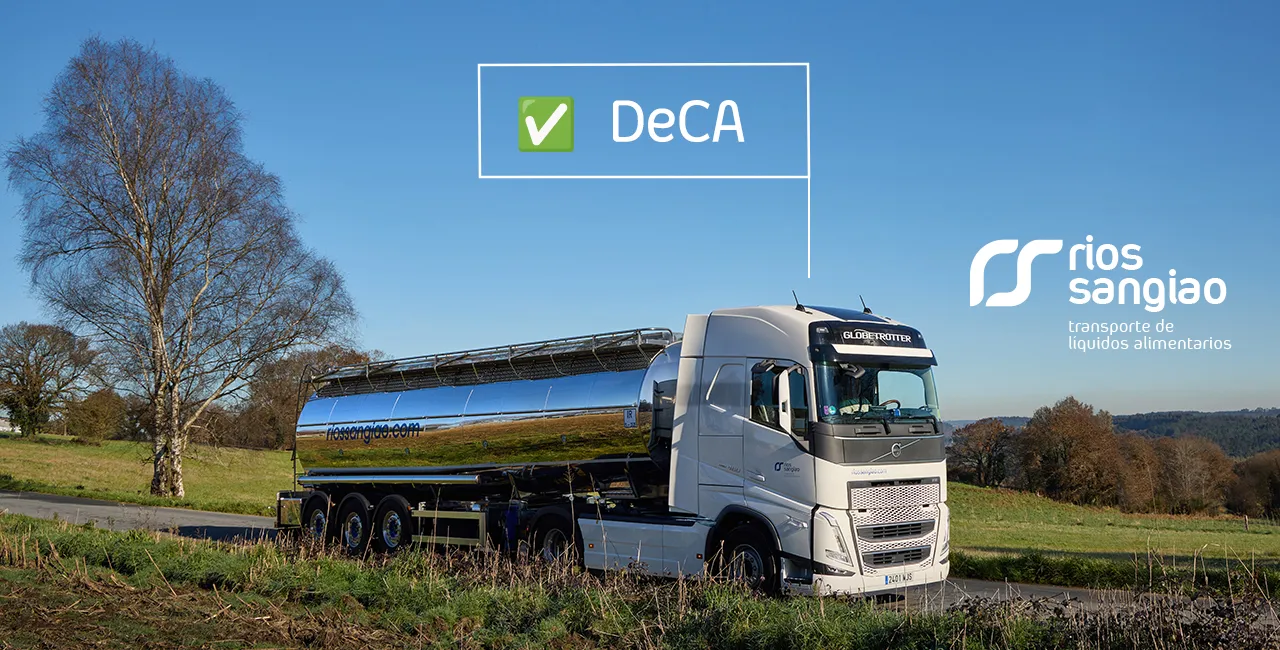
There are now only a few days left before it becomes compulsory to carry the Electronic Administrative Control Document (DeCA) on board vehicles; specifically, the regulation comes into force on 5 October, according to information from the Ministry of Transport and Sustainable Mobility.
All domestic transport within the national territory originating in or destined for Spain, as well as cabotage operations, must carry the document; however, international transport that passes partially through Spain is exempt. The following would therefore be affected by this measure:
those who contract the transport service.
those who physically carry out the transport.
acting as intermediaries with contractual responsibility for the operation.
The regulations set out in Order TRM/282/2026 have clarified the scope: the shipper is responsible for the consignment details; the carrier, for the operational details; and both may face penalties if the document is missing, was not generated before the start of the journey, or fails to include mandatory information.
For companies such as ours, which transport liquid foodstuffs, where each service may be subject to changes to stops or changes of plan during the journey, generating the documentation before the driver sets off can be complicated if the process is not centralised and digitised.
In our case, we have implemented the management of these DeCA documents via our ERP system, and the traffic department generates and distributes this documentation to our drivers based on route planning carried out through our internal applications.
• It must be generated before the start of the route
• It must be capable of being displayed during a check via a screen or a printed QR code
• It must contain the contractual shipper’s details, the actual carrier, origin, destination, date, nature and weight of the goods, and the vehicle registration number.
• Access to the information must be retained for the statutory period
This digitisation represents a further step towards transport traceability and control based on digitised information; in fact, from July next year, the CMR or international consignment note will be valid throughout Europe in its digital eCMR version, although it will still be possible to carry it in printed form.
Legislation is therefore moving towards fully digitised road transport management, which in most cases simplifies administrative procedures and helps companies like ours to be more efficient and have greater control over our vehicles and deliveries.


This has been the work of Sr. Concejo