In the food liquid transport sector, cleaning all elements that come into contact with liquids is a matter of absolute priority.
The health and quality standards we apply at Rios Sangiao exceed regulations to ensure and guarantee the maximum preservation of any food liquid we transport.
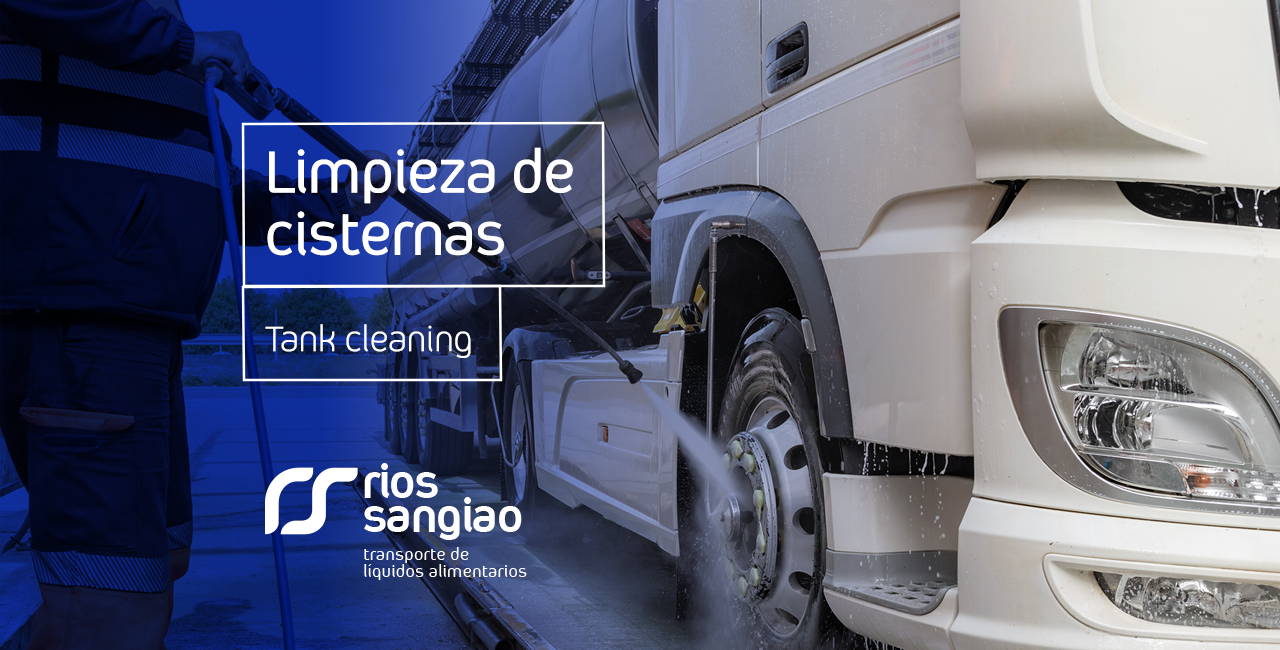
Our processes include the washing of tanks, which is carried out in specific washing stations that meet certain requirements according to the washing needs.
The washing we carry out in our isothermal tanks follows EFTCO protocols, which is the international association that includes 630 cleaning points in more than 25 countries in the European Union and whose objectives are to standardise reliable and environmentally friendly cleaning services. EFTCO cooperates with European federations such as the European Chemical Industry Council (Cefic), the European Chemical Transport Association (ECTA) and the International Tank Container Organisation (ITCO).
The EFTCO Cleaning Document (ECD) was launched over 25 years ago, withmore than 4 million documents completed annually at present. This makes the ECD the most recognised and number one cleaning document in Europe, with growing global expansion. The EFTCO Cleaning Document (ECD) is a
supporting document for each tank cleaning within the supply chain process. It certifies which cleaning steps have been carried out.
First, a cleaning order is generated in written format with all the necessary details to prevent damage to equipment, accidents and unsatisfactory service performance. This order includes information such as:
It is the responsibility of cleaning stations to comply with all specific requirements for cleaning coated and lined tanks and to notify if they are unable to fully comply with the requirements.
Depending on the type of products transported, we establish washing requirements that include:
Depending on the type of coating on the cistern, the water must not exceed a certain temperature, pressure, jet direction and pressure.
It is common for customers to add specific requirements according to their particular needs.
Once cleaning has been carried out, an inspection is performed to verify the process, and the tank will be declared clean when there are no visible traces of the last product or cleaning agent after inspection from the filling ports. Entry into the tank is avoided to minimise the risk of external contamination.
Once the washing and drying process has been completed, where applicable, the washing is certified in order to ensure traceability of the processes applied in the isothermal tank and to provide supporting documentation for the application of all processes required by Rios Sangiao or the customer.


This has been the work of Sr. Concejo